Premix vs Drop-On Glass Beads: Which Is Better for Road Marking Paint?
-
prime-shop
- Posted on
- 0 comments
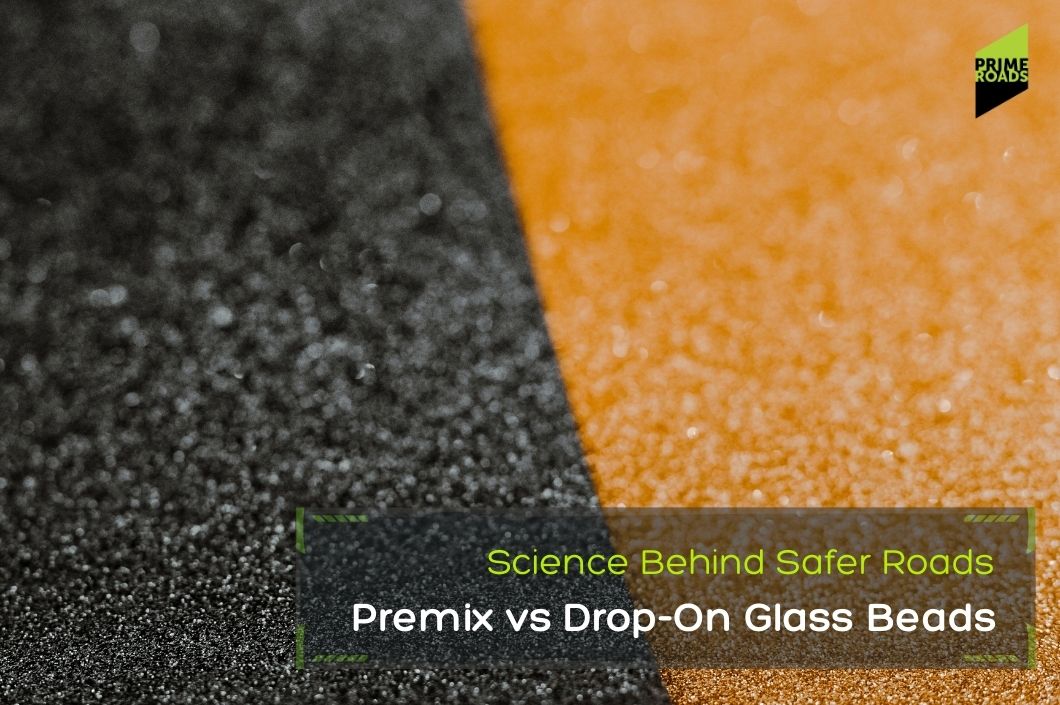
Ever Wondered Why Some Road Markings Vanish After Sunset?
Road marking visibility plays a critical role in driver safety, yet many projects suffer from poor night-time performance due to incorrect glass bead selection. Choosing between premix vs drop-on glass beads directly impacts reflectivity, durability, and maintenance costs. This blog explains how each bead type works, where it performs best, and how the right choice ensures compliant, long-lasting, and highly visible road markings across urban roads and highways.
What are Glass Beads?
Road markings are more than painted lines, they are critical safety tools that guide drivers, especially at night and during adverse weather. The real thing behind visible lane markings is glass beads, which enable retro reflectivity by bouncing vehicle headlight beams back to the driver’s eyes.
When correctly applied, road marking glass beads significantly improve:
- Night-time visibility
- Wet-weather performance
- Lane discipline and reaction time
- Overall road safety
However, poor reflectivity is one of the most common complaints raised by highway authorities and municipal bodies. In most cases, the issue is not the paint, but the wrong choice or incorrect application of glass beads.
Why Should We Choose the Right Bead Type
Choosing the right reflectivity approach goes beyond visibility, influencing safety performance, regulatory compliance, maintenance frequency, project lifespan, and overall lifecycle costs of road marking systems.
✔️ Compliance with IRC and MORTH guidelines
✔️ Maintenance frequency and repainting cycles
✔️ Long-term project costs
✔️ Tender acceptance and performance audits
In short, the right glass bead strategy ensures that reflective road paint performs consistently throughout its service life, not just on day one.
Facts:
- Glass beads with a minimum 95% true spherical shape and size range ~1–1.5 mm are specified in MoRTH for thermoplastic pavement markings.
What Are Premix Glass Beads?
Premix glass beads are blended inside thermoplastic road marking paint during manufacturing. Once the marking is applied and traffic begins to wear the surface, these beads gradually get exposed, providing long-term reflectivity.
Key Characteristics of Premix Beads
- Embedded within thermoplastic beads
- Offer delayed but sustained reflectivity
- Protected from immediate traffic wear
- Factory-controlled consistency
Note: Typical bead content (30–40% by weight), refractive index ≥1.50
What Are Drop-On Glass Beads?
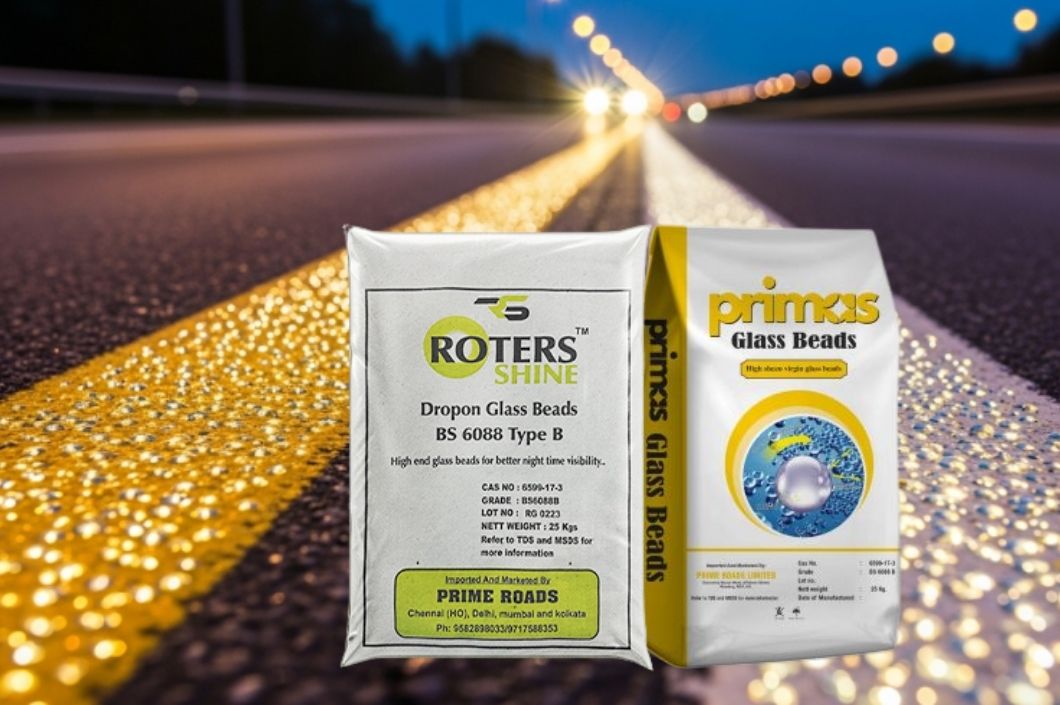
Drop-on glass beads are sprayed or dropped onto the hot thermoplastic paint surface immediately after application. They provide instant retroreflectivity, making lane markings visible as soon as the road opens to traffic.
Key Characteristics of Drop-On Beads
- Surface-applied
- Deliver high initial brightness
- Critical for night-time visibility
- Performance depends on correct application rate and embedding depth
Drop-on glass beads typically serve as the main source of reflectivity, particularly on high-speed highways and expressways, where immediate brightness and long-distance visibility are critical for driver safety.
Premix vs Drop-On Glass Beads: A Practical Comparison
Understanding the difference between premix vs drop-on glass beads requires looking beyond theory and into real-world performance.
1. Reflectivity Performance
- Premix beads: Gradual reflectivity over time
- Drop-on beads: Immediate and high initial brightness
2. Durability
- Premix beads are protected inside the marking
- Drop-on beads face direct traffic abrasion
3. Maintenance Impact
- Premix reduces long-term reflectivity loss
- Drop-on beads may require reapplication if poorly embedded
4. Cost Consideration
- Premix beads are part of the paint cost
- Drop-on beads add material and application expenses but improve safety outcomes
This premix vs drop-on glass beads comparison highlights that neither option works best alone in all situations.
IRC and MORTH Relevance
Standards set by the Indian Roads Congress (IRC) and MORTH place strong emphasis on specific performance criteria to ensure road markings deliver consistent visibility, safety, and durability across varied traffic and weather conditions.
- Minimum retro reflectivity values
- Correct bead gradation
- Proper application rates
- Compatibility with thermoplastic materials
Projects that fail to meet these parameters often face:
- Early performance failures
- Audit objections
- Costly rework
Choosing the right road marking glass beads helps contractors and authorities stay compliant while delivering safer roads.
Common Mistakes That Reduce Reflectivity
Despite using quality reflective road paint, failures often occur due to:
- Incorrect bead size selection
- Over- or under-application of drop-on beads
- Poor embedding due to temperature mismatch
- Ignoring road-specific conditions
These errors lead to premature fading, increased maintenance costs, and user complaints, issues that can be avoided with informed bead selection.
Which Is Better: Premix or Drop-On Glass Beads?
The right choice is determined by road conditions, traffic speed, usage patterns, and compliance requirements rather than personal preference, making context the most important factor in decision-making.
- Premix beads excel in durability and long-term performance
- Drop-on beads deliver immediate visibility and safety
- The most effective solution often combines both
This balanced approach resolves the long-standing debate around premix vs drop-on glass beads by aligning reflectivity strategy with real road conditions.
| Parameter | Premix Glass Beads | Drop-On Glass Beads |
| Application Method | Mixed inside thermoplastic paint | Applied on top of hot paint surface |
| Reflectivity Timing | Gradual, long-term reflectivity | Immediate high initial brightness |
| Exposure to Traffic | Protected within marking | Directly exposed to traffic wear |
| Best Use Case | Urban & moderate traffic roads | Highways & high-speed roads |
| Maintenance Impact | Supports longer service life | May need reapplication if worn |
Choosing the right bead type ensures optimal visibility, compliance, durability, and long-term cost efficiency for every road marking project.
Prime Roads: Supporting Smarter Road Marking Decisions
As a leading thermoplastic road paints manufacturer and supplier, Prime Roads offers high-performance drop-on glass beads engineered for Indian traffic and climate conditions.
 Designed to work perfectly with thermoplastic beads and reflective road paint systems, our bead solutions help projects achieve:
- Higher retroreflectivity
- Better compliance
- Reduced maintenance cycles
Our glass bead offerings support both municipal and highway applications, ensuring performance from installation to end-of-life.
End Thoughts
For highway authorities, municipal bodies, contractors, and consultants, making the right reflectivity choice today can prevent costly visibility complaints, rework, and maintenance issues in the future.
With technically engineered glass bead solutions, Prime Roads helps in implementing reliable, compliant, and performance-driven road marking systems that deliver long-lasting safety, superior night visibility, and measurable lifecycle value across diverse road environments.
FAQ’s
1. What is the difference between premix and drop-on glass beads?
Premix beads are mixed inside thermoplastic paint for long-term reflectivity, while drop-on beads are applied on the surface to provide immediate night-time visibility.
2. Which is better for highways: premix or drop-on glass beads?
Drop-on glass beads are essential for highways because they deliver high initial brightness required for safe high-speed driving.
3. Do premix beads improve durability?
Yes. Premix beads enhance long-term reflectivity as traffic gradually exposes embedded beads over time.
4. Why do some road markings lose visibility quickly?
Poor bead selection, incorrect application rates, or improper embedding often lead to reduced reflectivity and premature fading.
5. Are glass beads required as per IRC and MORTH standards?
Yes. IRC and MORTH guidelines specify reflectivity and bead application standards to ensure road safety and compliance.