

What Affects Thermoplastic Road Marking Paint Cost?
-
 prime-shop
 - Posted on
- 0 comments

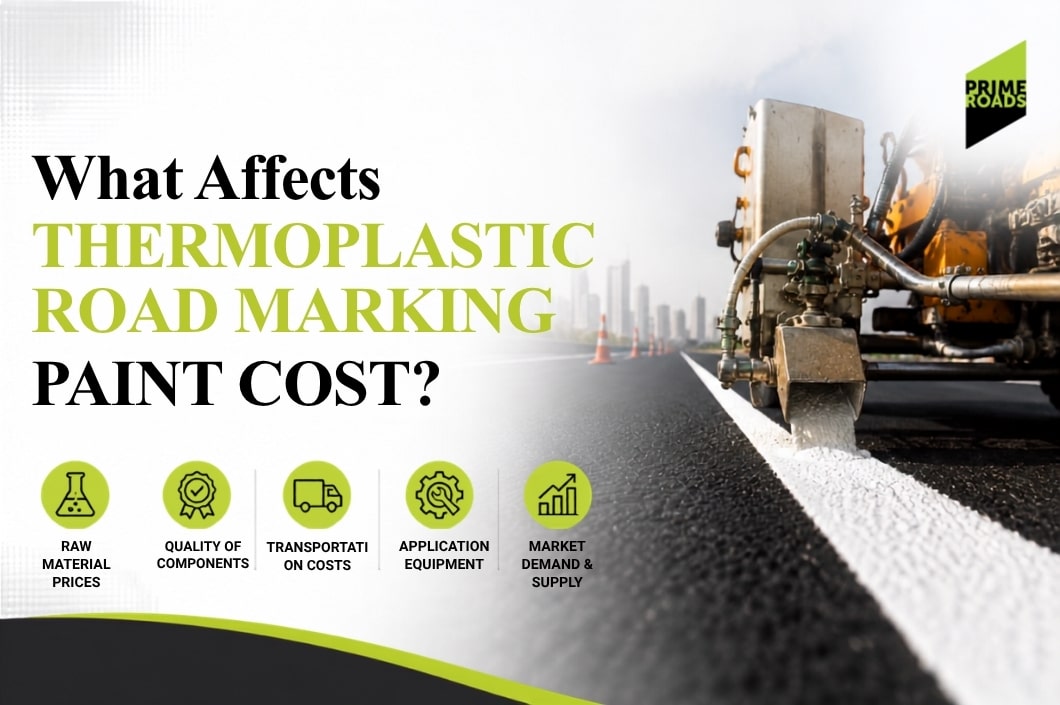
Road markings play a critical role in traffic management, road safety, and infrastructure development. From highways and urban roads to airports and industrial facilities, durable and highly visible markings help guide drivers, reduce accidents, and improve traffic flow. As infrastructure projects continue to expand across India and international markets, many contractors, procurement teams, and urban developers are researching the thermoplastic road marking paint cost before finalizing project budgets.
This guide explains the major factors that affect thermoplastic road marking paint cost and estimate project costs more accurately.
What Drives Thermoplastic Road Marking Paint Costs?
Several technical and commercial factors contribute to the final cost of thermoplastic road marking solutions.
Raw Material Quality
Raw materials represent one of the largest cost components in thermoplastic paint manufacturing. A typical thermoplastic formulation contains:
- Hydrocarbon or alkyd resins
- Titanium dioxide pigments
- Calcium carbonate fillers
- Glass beads
- Plasticizers
- Performance-enhancing additives
Among these, titanium dioxide and high-performance resins are particularly expensive. Manufacturers that use premium-grade raw materials generally produce markings with better brightness, weather resistance, and durability.
While lower-cost formulations may appear economical initially, they often wear out faster under heavy traffic conditions.
Reflectivity Requirements
Road visibility during nighttime and adverse weather conditions is a critical safety requirement. Many infrastructure projects require reflective road marking paint capable of providing enhanced retro reflectivity when illuminated by vehicle headlights.
To achieve this performance, manufacturers design formulations that effectively bond with glass beads and maintain reflectivity over time. Higher reflectivity standards often require superior raw materials and tighter quality controls, which can increase pricing.
Paint Color Selection
The color of thermoplastic paint can significantly impact manufacturing costs. White thermoplastic paint generally contains higher concentrations of titanium dioxide, which is one of the most expensive ingredients in road marking formulations.
Common colors include:
- White
- Yellow
- Red
- Blue
- Green
- Black
Specialized colors used in airports, industrial zones, cycling tracks, and pedestrian pathways may require additional pigments and additives, resulting in higher production costs.
Performance Specifications
Not all thermoplastic paints are manufactured to the same performance standards. Project requirements may include:
- High abrasion resistance
- Enhanced skid resistance
- Superior adhesion
- UV resistance
- Heat resistance
- Weather durability
Roads exposed to heavy traffic loads, extreme temperatures, or frequent rainfall typically require higher-performance products.
As performance requirements increase, manufacturers may incorporate advanced additives and premium resins, which contribute to a higher thermoplastic road marking paint price.
Compliance with Industry Standards
Government agencies, highway authorities, airports, and infrastructure developers often require road marking materials that comply with specific standards and specifications. These may include:
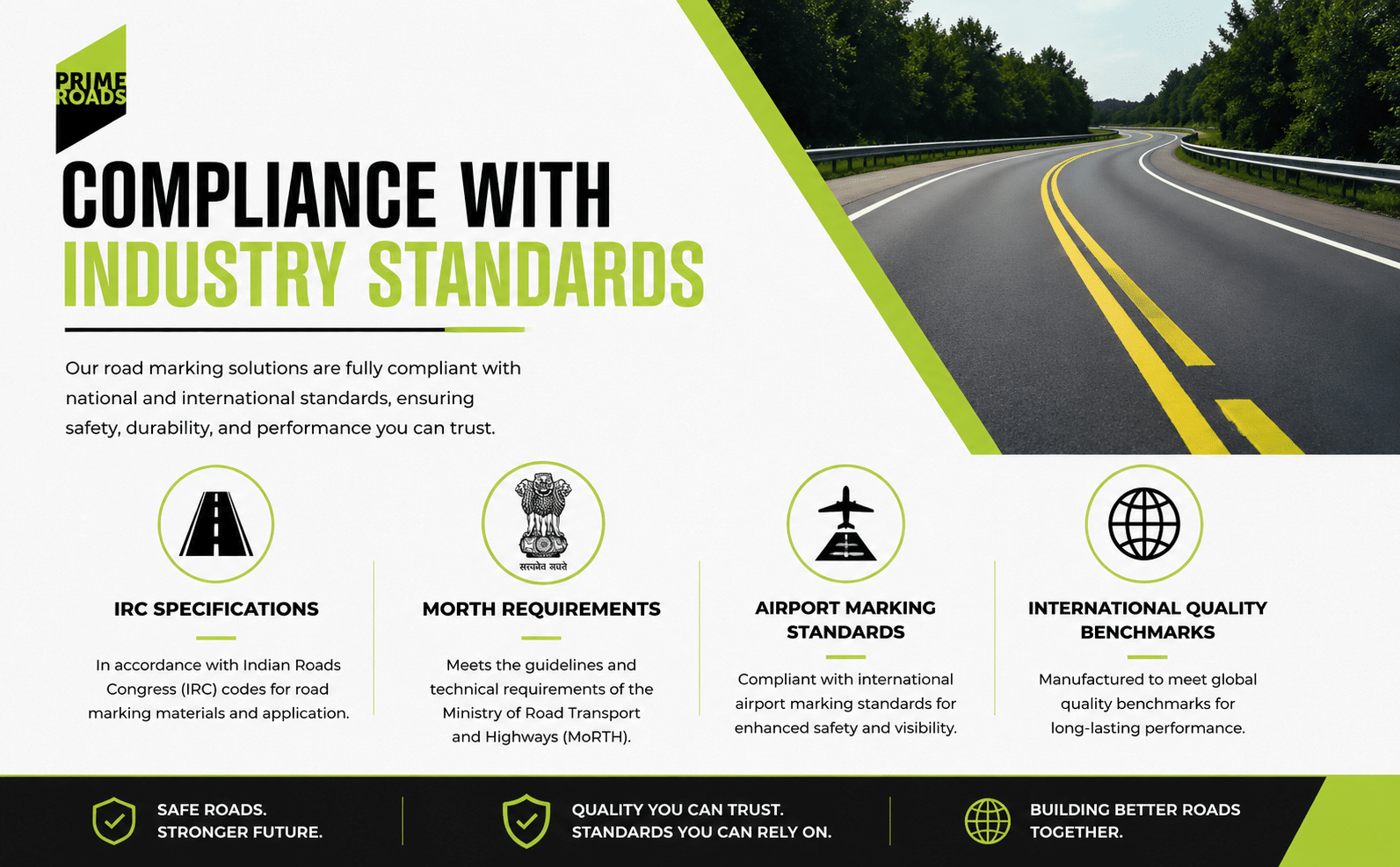
- IRC specifications
- Ministry of Road Transport and Highways(MORTH) requirements
- Airport marking standards
- International quality benchmarks
Compliance involves stringent quality control procedures, laboratory testing, and performance validation.
Manufacturers that consistently meet these standards invest heavily in research, testing, and production processes, which influences product pricing.
Quantity Ordered
Order volume plays a major role in pricing. Large infrastructure projects typically benefit from economies of scale, allowing manufacturers to optimize production and logistics. Bulk purchases may reduce:
- Packaging costs
- Transportation expenses
- Production overheads
Contractors and procurement teams planning large-scale projects should discuss volume requirements with suppliers to obtain more competitive pricing.
Transportation and Logistics Costs
Logistics expenses can significantly affect overall project budgets. Transportation costs vary depending on:
- Delivery location
- Distance from manufacturing facility
- Fuel prices
- Freight charges
- Export shipping costs
- Port handling fees
For international buyers and importers, logistics can account for a substantial portion of the total procurement cost. As a result, the final thermoplastic paint cost may differ even when the product specifications remain identical.
Application Thickness and Coverage
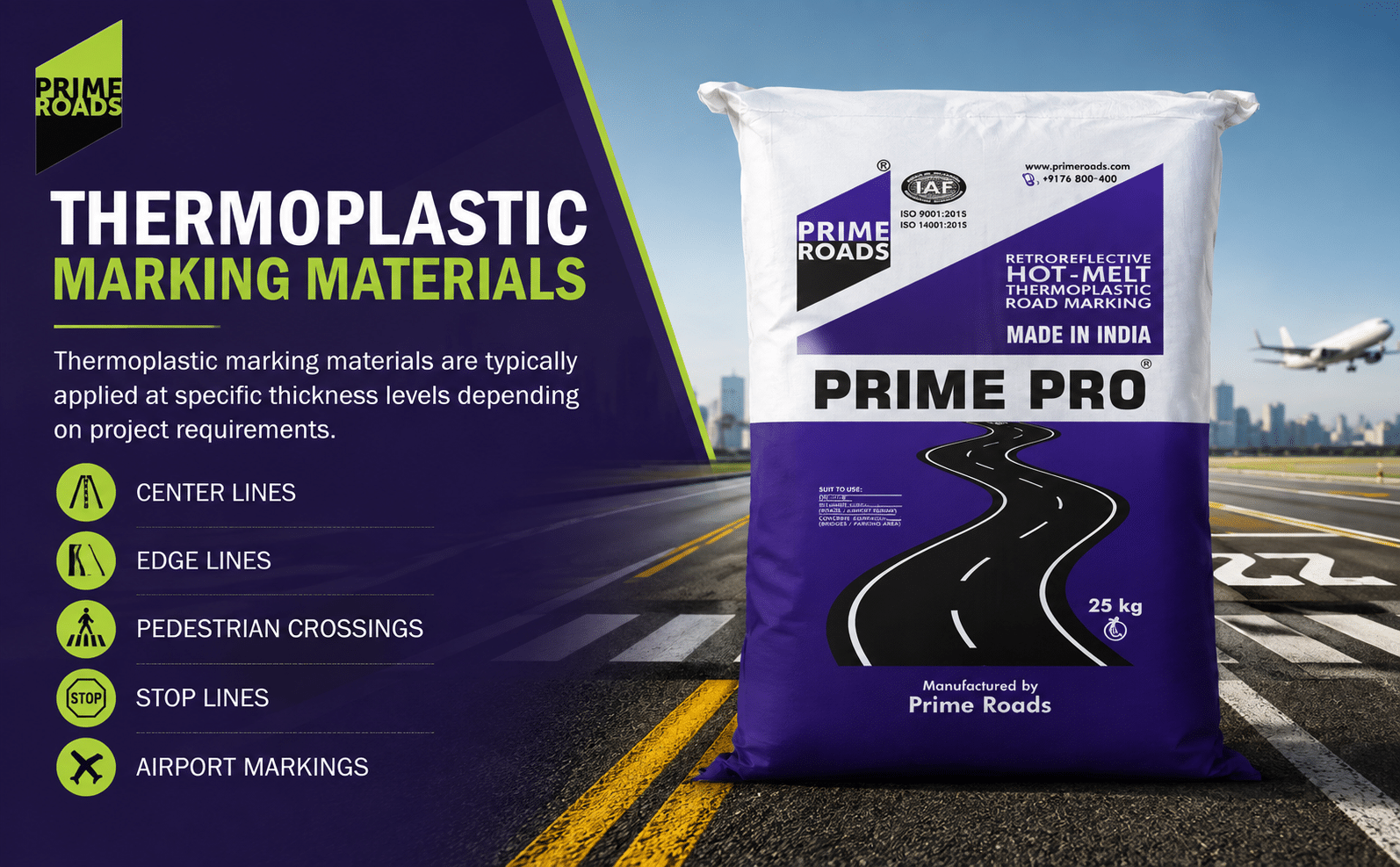
Thermoplastic marking materials are typically applied at specific thickness levels depending on project requirements. Common applications include:
- Center lines
- Edge lines
- Pedestrian crossings
- Stop lines
- Airport markings
Thicker applications consume more material and increase overall project costs. Buyers should evaluate not only product pricing but also coverage efficiency when estimating material requirements.
⭐Explore our range of thermoplastic road marking paints to find the right fit for your project.
What Influences Thermoplastic Road Marking Paint Pricing?
When comparing quotations from different manufacturers, buyers often notice substantial differences in pricing. This variation is usually due to differences in raw material quality, formulation standards, performance characteristics, compliance requirements, and manufacturing expertise.
A low-priced product may reduce upfront expenditure but could require more frequent maintenance and repainting. On the other hand, a premium-grade thermoplastic paint may offer superior durability, brightness, and reflectivity, resulting in lower lifecycle costs.
Therefore, evaluating the thermoplastic paint cost solely based on cost per kilogram can be misleading. Buyers should also consider long-term performance, visibility, and maintenance requirements.
Pricing Factors at a Glance
| Factor | Impact on Price | Why It Matters |
| Raw material quality | High | Influences durability and performance |
| Titanium dioxide content | High | Affects brightness and visibility |
| Reflectivity requirements | Medium-High | Improves nighttime visibility |
| Compliance standards | Medium-High | Ensures regulatory approval |
| Paint color | Medium | Specialized pigments increase costs |
| Quantity ordered | Medium | Bulk orders may reduce costs |
| Transportation | Medium | Freight impacts final pricing |
| Application thickness | High | Determines material consumption |
Thermoplastic Road Paint: Project Cost Estimation
Estimating the overall thermoplastic road paint cost requires consideration of multiple factors beyond material procurement. A simplified project cost formula may include:
Total Project Cost = Material Cost + Glass Beads + Application Cost + Transportation Cost + Maintenance Cost
Important considerations include:
- Road length
- Line width
- Application thickness
- Traffic volume
- Surface condition
- Reflectivity requirements
- Labor expenses
Infrastructure developers and estimation engineers should calculate the complete project lifecycle cost rather than focusing solely on initial material pricing.
What Is the Typical Road Marking Paint Price Per Kg?
One of the most common questions buyers ask is about the road marking paint price per kg. However, there is no universal price applicable to every project because costs fluctuate based on:
- Raw material market conditions
- Resin prices
- Titanium dioxide costs
- Product specifications
- Quantity ordered
- Delivery location
- Export requirements
A premium-grade product designed for highways and airports will naturally differ in pricing from a basic formulation intended for low-traffic applications.
Instead of relying solely on the road marking paint price per kg, buyers should request detailed quotations that account for performance requirements and project specifications.
How Do Global Market Conditions Affect Highway Paint Cost?
The road marking industry is closely connected to global raw material and logistics markets. Several external factors can influence highway paint cost, including:
Crude Oil Prices
Many thermoplastic components are derived from petroleum-based products. Rising oil prices often lead to higher resin costs.
Titanium Dioxide Market Trends
Titanium dioxide is a globally traded commodity. Supply shortages or increased demand can affect paint manufacturing costs.
Shipping and Freight Rates
International logistics costs can fluctuate significantly due to fuel prices, port congestion, and shipping availability.
Currency Exchange Rates
Importers and exporters are often affected by foreign exchange movements, which can alter procurement expenses.
Understanding these market dynamics helps buyers plan budgets more effectively and avoid unexpected cost increases.
Why Should Buyers Request a Customized Quotation?
Every road marking project has unique requirements. Factors such as road type, traffic density, environmental conditions, reflectivity expectations, and project location all influence the final thermoplastic road marking paint price. A customized quotation allows suppliers to evaluate:
- Application requirements
- Material specifications
- Quantity needed
- Delivery destination
- Compliance standards
- Project timelines
This approach provides a more accurate estimate and helps buyers avoid unforeseen expenses.
Cost Summary
When evaluating thermoplastic road marking solutions, remember:
- Raw material quality directly impacts pricing and performance.
- Reflectivity requirements influence manufacturing costs.
- Compliance standards affect quality control and testing expenses.
- Transportation and logistics contribute to total procurement costs.
- Bulk purchases may reduce per-unit costs.
- Premium materials often provide lower lifecycle costs.
- Customized quotations deliver the most accurate project estimates.
Wrapping Up
Choosing the right road marking solution involves more than comparing prices. Durability, visibility, compliance, and long-term performance all play a vital role in determining project value.
As a trusted road marking paint manufacturer, Prime Roads offers high-performance thermoplastic road marking solutions engineered for highways, urban roads, airports, industrial facilities, and infrastructure projects.
📞Contact Prime Roads today for a customized quotation tailored to your project.


