

Airport Runway Thermoplastic Paint: ICAO Standards Guide
-
 prime-shop
 - Posted on
- 0 comments

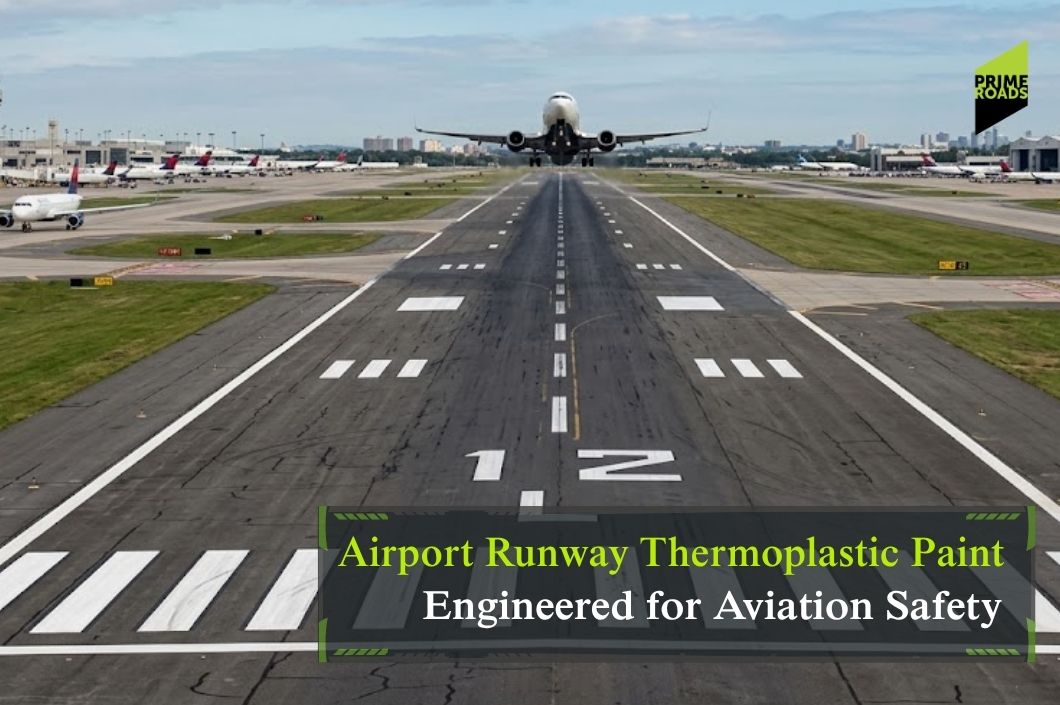
Airports across the world depend heavily on clear and highly visible runway guidance systems to ensure safe aircraft movement during landing, taxiing, and takeoff. According to aviation safety studies, a significant percentage of runway navigation incidents are linked to poor visibility, faded surface guidance, or unclear runway markings, especially during night operations and adverse weather conditions. This is why selecting the right airport runway thermoplastic paint has become a critical part of modern airfield infrastructure planning.
However, many aviation projects still face challenges such as sourcing certified materials, understanding ICAO specifications, maintaining runway marking retro reflectivity, and ensuring airport marking compliance across different operational zones.
This guide explains ICAO standards in simple terms, explores approved marking systems, and helps aviation stakeholders understand how high-performance thermoplastic materials support durable and compliant runway markings.
The Importance of High-Visibility Runway Markings in Airports
Modern airports operate under extremely demanding conditions. Aircraft move at high speeds, runway lighting conditions vary constantly, and markings must remain visible despite exposure to fuel spills, rubber deposits, UV radiation, heavy rainfall, and aircraft tire friction. Poorly maintained runway markings can create serious operational risks, including:
- Pilot misidentification of taxiways
- Reduced visibility during low-light conditions
- Incorrect aircraft alignment
- Delayed ground movement operations
- Increased maintenance shutdowns
Unlike standard roadway applications, airport surfaces require highly specialized airfield pavement marking materials that can withstand extreme operational stress while maintaining consistent reflectivity and visibility. This is where thermoplastic technology plays a major role. Thermoplastic runway systems provide:
- Enhanced night visibility
- Strong adhesion to pavement surfaces
- Long operational lifespan
- Faster drying and curing
- High skid resistance
- Improved runway marking retro reflectivity
Because of these benefits, thermoplastic systems are widely preferred for thermoplastic road marking airport applications worldwide.
Understanding ICAO Annex 14 for Airport Runway Thermoplastic Paint
The International Civil Aviation Organization (ICAO) established Annex 14 to standardize airport design and operational safety practices globally. In simple terms, ICAO Annex 14 defines how airport infrastructure, including runway markings, should be designed, positioned, colored, and maintained to ensure safe aircraft navigation.
For airport engineers and procurement teams, Annex 14 acts as the primary technical reference for selecting compliant marking systems and approved airfield pavement marking materials. When specifying airport runway thermoplastic paint, ICAO requirements mainly focus on:
- Color consistency
- Surface visibility
- Reflective performance
- Skid resistance
- Durability under aircraft loading
- Marking dimensions and layout
- Resistance to environmental exposure
The purpose of these standards is to ensure pilots receive clear visual guidance under all operating conditions.
Key ICAO Requirements for Runway Markings
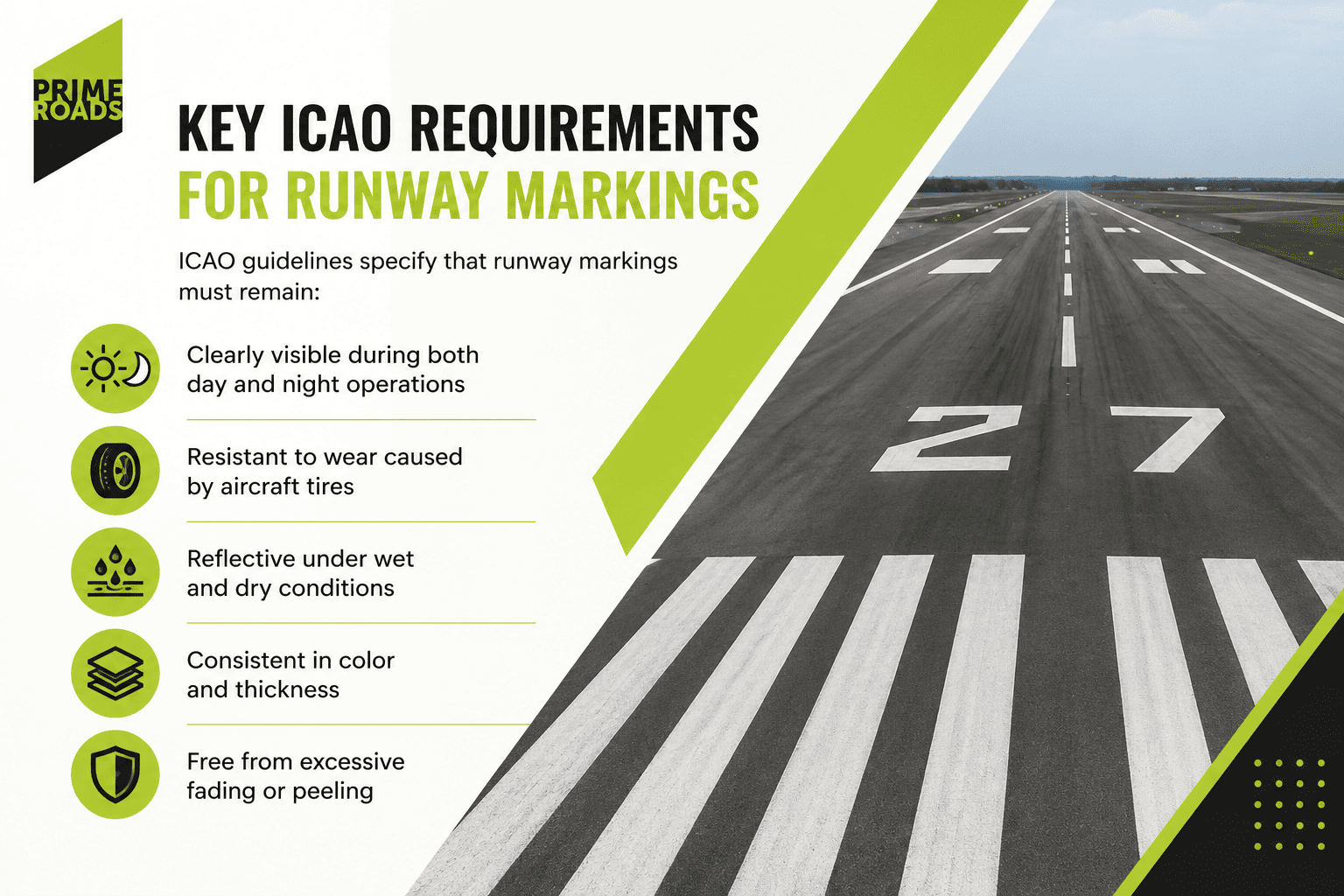
ICAO guidelines specify that runway markings must remain:
- Clearly visible during both day and night operations
- Resistant to wear caused by aircraft tires
- Reflective under wet and dry conditions
- Consistent in color and thickness
- Free from excessive fading or peeling
In many airport modernization projects, engineers rely on advanced airfield thermoplastic marking specifications to meet these performance standards while minimizing long-term maintenance requirements.
ICAO Color Codes and Airfield Thermoplastic Marking Specifications
Understanding approved color codes is essential for airport marking compliance. ICAO defines specific colors for different operational zones to ensure pilots can quickly distinguish runway areas, taxiways, holding positions, and restricted zones. Below is a simplified reference table used in many airport infrastructure projects.
| Marking Type | ICAO Color Code | Recommended Material Specification |
| Runway centerline | White | High-retroreflective thermoplastic |
| Runway threshold markings | White | Abrasion-resistant thermoplastic |
| Taxiway centerline | Yellow | Heat-resistant thermoplastic |
| Holding position markings | Yellow | High-durability reflective thermoplastic |
| Apron safety markings | White/Yellow | Skid-resistant thermoplastic |
| Surface guidance markings | Black contrast border where required | UV-resistant thermoplastic |
For large-scale aviation projects, following accurate airfield thermoplastic marking specifications is critical to avoid rejection during inspections or regulatory audits. High-performance thermoplastic systems used in airport projects often include:
- Titanium dioxide pigments for brightness
- Reflective glass beads
- Heat-resistant binders
- Anti-skid aggregates
- UV-stable resins
These engineered formulations help improve runway marking retroreflectivity while ensuring long-term operational durability.
Runway Marking Retroreflectivity and Durability Standards
One of the most important performance factors in airport runway systems is runway marking retro reflectivity. It refers to the ability of markings to reflect light back toward its source, helping pilots clearly identify guidance markings during night operations or low-visibility conditions.
In airport environments, maintaining consistent runway marking retro reflectivity is essential because pilots rely heavily on visual guidance while approaching or taxiing aircraft.
Importance of Reflective Glass Beads
Modern thermoplastic systems incorporate high-quality reflective glass beads to improve visibility. These beads reflect aircraft landing lights back toward pilots, significantly enhancing nighttime navigation safety. The effectiveness of reflective performance depends on:
- Bead quality
- Bead distribution
- Surface embedment depth
- Material thickness
- Application temperature
Low-grade materials often fail to retain reflective performance for long periods, leading to faster deterioration and increased maintenance cycles.
Durability Under Aircraft Stress
Airport pavements experience much higher stress levels than conventional highways. Aircraft tires create:
- High friction forces
- Heavy abrasion
- Intense heat buildup
As a result, only specialized airfield pavement marking materials should be used for airport operations. Advanced thermoplastic systems provide:
- Strong pavement adhesion
- Resistance to rubber buildup
- Longer service life
These advantages make thermoplastic road marking airport solutions highly suitable for busy international airports where operational downtime must be minimized.
Common Compliance Failures in Airport Marking Projects
Despite strict aviation regulations, many airport projects still encounter compliance-related failures due to incorrect material selection or improper application practices. Understanding these common issues can help airport authorities avoid costly rework and operational disruptions.
1. Incorrect Color Coding
Using non-approved colors can create confusion for pilots and may result in failed inspections. ICAO-approved color systems must always be followed precisely.
2. Poor Reflective Performance
Low-quality materials often fail to maintain adequate runway marking retroreflectivity, especially under wet conditions or heavy aircraft traffic.
3. Improper Application Thickness
Inconsistent thickness may cause:
- Premature wear
- Surface cracking
- Peeling
- Reduced skid resistance
Professional contractors must ensure accurate application controls throughout the project.
4. Use of Non-Certified Materials
One of the biggest challenges in airport infrastructure projects is sourcing reliable and certified airfield pavement marking materials. Using substandard products can result in:
- Regulatory non-compliance
- Faster deterioration
- Increased lifecycle costs
- Costly reapplication work
For this reason, airport authorities increasingly prefer experienced manufacturers capable of supplying technically validated thermoplastic systems for airport marking compliance.
How to Select ICAO-Compliant Airport Runway Thermoplastic Paint
Selecting the right airport runway thermoplastic paint requires more than comparing prices. Procurement teams should evaluate the material based on long-term operational performance, compliance reliability, and lifecycle value.
Key Questions Procurement Teams Should Ask
Before finalizing materials, aviation authorities should verify:
- Does the material meet ICAO visibility standards?
- Is the product suitable for high-load airport operations?
- Does the supplier provide technical datasheets?
- Are reflective performance values documented?
- Is the material resistant to fuel spills and UV exposure?
These questions help reduce project risk and improve long-term operational efficiency.
Importance of Technical Documentation
Reliable manufacturers typically provide:
- Product datasheets
- Application guidelines
- Reflectivity performance data
- Safety compliance documentation
- Material testing reports
Long-Term Cost Benefits
Although premium thermoplastic systems may involve higher initial costs, they often deliver substantial long-term savings through:
- Reduced repainting frequency
- Lower maintenance shutdowns
- Improved operational safety
- Extended service life
This is why many modern aviation projects prioritize durable thermoplastic road marking airport systems over conventional paint-based alternatives.
Why Prime Roads Supports Airport Marking Compliance
At Prime Roads, we are committed to delivering high-performance thermoplastic road marking solutions that meet the evolving demands of modern airport infrastructure. Our focus on quality manufacturing, consistent material performance, and durable reflective systems helps support reliable airport marking compliance across runways, taxiways, and airfield zones.
With advanced production capabilities and technical expertise, we provide thermoplastic materials designed for superior visibility, durability, and long-term operational efficiency. We work closely with contractors and infrastructure teams to deliver dependable marking solutions tailored for aviation safety standards.
End Words
From accurate color coding and superior reflectivity to optimal thickness and long-lasting durability, our thermoplastic solutions are developed to support ICAO-compliant runway marking systems for safe and efficient aircraft movement.
For airport engineers, aviation authorities, and infrastructure contractors, Prime Roads provides reliable airport runway thermoplastic paint solutions designed to improve visibility performance, support regulatory compliance, and reduce long-term maintenance challenges across critical airfield areas. As global airports continue upgrading infrastructure, our certified thermoplastic systems and high-performance airfield pavement marking materials help deliver dependable and efficient aviation marking solutions.
Partner with Prime Roads for reliable airport runway marking solutions. Contact us now.
FAQs
1) What is ICAO-compliant thermoplastic paint for runways?
ICAO-compliant thermoplastic paint is a specialized runway marking material designed to meet international aviation standards for visibility, durability, skid resistance, and reflective performance.
2) Why is runway marking retroreflectivity important?
Runway marking retroreflectivity improves pilot visibility during night operations and low-light conditions by reflecting aircraft lights back toward the cockpit.
3) What colors are approved for airport runway markings?
ICAO typically specifies white for runway markings and yellow for taxiway markings, with black contrast borders used where necessary.
4) How long do thermoplastic runway markings last?
Depending on airport traffic conditions and maintenance practices, thermoplastic runway markings can typically last several years while maintaining strong visibility performance.
5) Why are thermoplastic materials preferred for airport projects?
Thermoplastic materials offer longer durability, faster drying, higher reflectivity, and stronger resistance to aircraft tire abrasion compared to conventional paints.


