

Why Pavement Marking Materials Are Essential for Modern Roads
-
 prime-shop
 - Posted on
- 0 comments

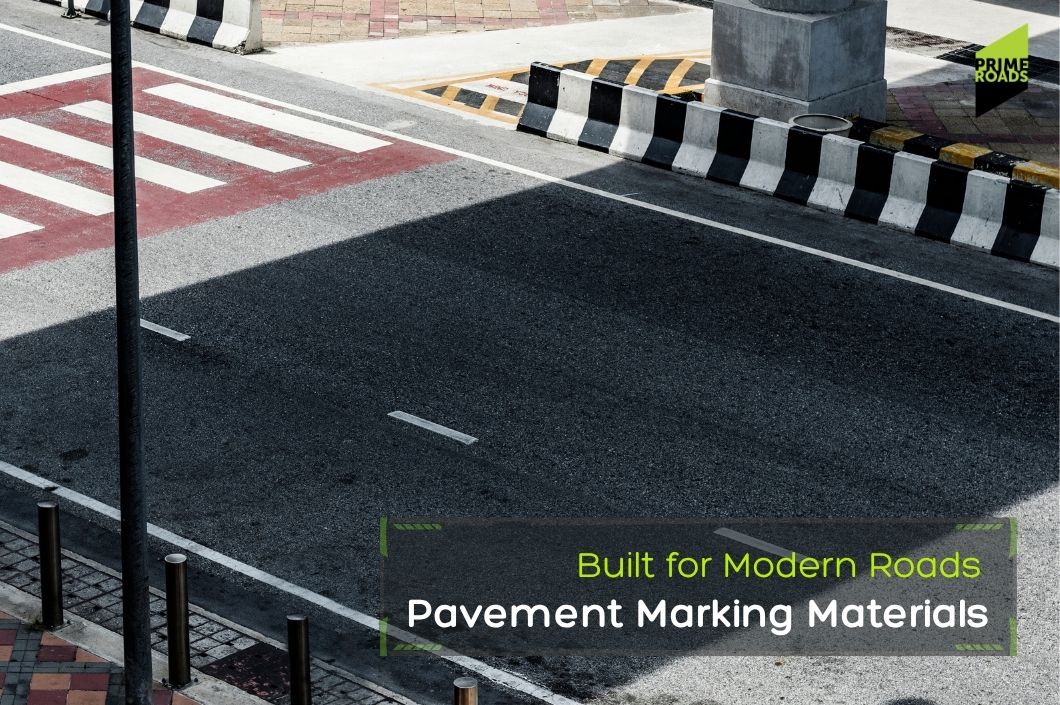
Pavement marking materials are one of the most critical and most overlooked components of road safety infrastructure in India. According to the World Health Organization, the absence of clear road markings contributes to up to 30% of road traffic accidents on multi-lane roads — making material selection a direct factor in lives saved or lost on every highway project.
This guide covers every major type of pavement marking material, the Indian regulatory standards that govern them, and a practical decision framework for highway contractors, municipal engineers, and procurement officers.
What Are Pavement Marking Materials?
Pavement marking materials are applied coatings, physical markers, and reflective systems used on road surfaces to communicate lane boundaries, pedestrian crossings, stop lines, hazard warnings, and directional guidance to drivers.
They include thermoplastic paint, water-based and solvent-based road paint, glass beads, raised pavement markers, kerb paints, and cold plastic (MMA) systems. Each material type has a defined performance envelope — the right choice depends on traffic volume, required service life, ambient conditions, and applicable standards such as IRC:35 and MoRTH specifications.

The Main Types of Pavement Marking Materials
1. Thermoplastic Road Marking Paint
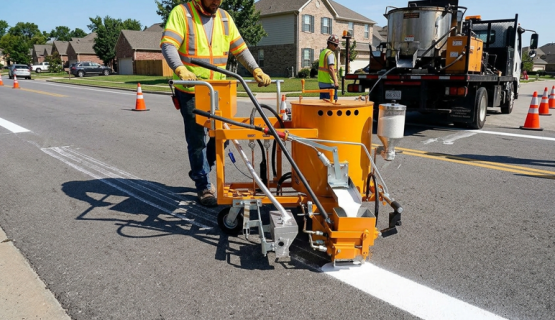
Thermoplastic paint is the dominant pavement marking material specified on Indian national highways and urban arterials. It is a solid compound applied hot — typically at 180–220°C — that bonds directly to the asphalt or concrete surface and sets within minutes of application.
It is available in hot-applied screed, extrusion, and pre-formed sheet variants. For high-volume procurement, screed thermoplastic is the cost-effective standard specification.
Why engineers specify thermoplastic over conventional paint:
- Service life of 3–5 years on high-traffic highways versus 6–18 months for conventional road paint
- Superior retro reflectivity via embedded glass beads
- Mandated under IRC:35 and MoRTH specifications for all national highways and state roads above defined traffic thresholds
2. Water-based and solvent-based Road Paint
Conventional road paints are used for lower-traffic applications — car parks, internal facility roads, temporary construction-phase markings, and kerb painting. They are faster to apply and lower in cost per litre, but have significantly shorter service lives under heavy wheel loads.
Use cases for road paint over thermoplastic:
- Temporary road markings during construction phases
- Kerb painting and crash barrier delineation
- Low-traffic residential or internal roads where thermoplastic application equipment is not available
3. Glass Beads for Road Marking
Glass beads are not a standalone marking material — they are the retro reflectivity system within thermoplastic road markings. They are applied either pre-mixed into the thermoplastic compound (premix beads) or dropped onto the wet surface immediately after application (drop-on beads).
Their function is retroreflection: the spherical beads refract incoming headlight beams back toward the driver’s eyes, making road markings visible at night and in wet conditions. Retro reflectivity is measured in mcd/m²/lux — ASTM E1710 sets a minimum threshold of 100 mcd/m²/lux for highway markings.
- Premix beads are distributed throughout the compound and provide sustained retro reflectivity as the surface wears down
- Drop-on beads sit on the surface for immediate high retro reflectivity but reduce in effect as the topmost layer wears
- Best-practice installations use both types: premix for longevity, drop-on for immediate night visibility
Indian Roads Congress specification IRC:35 and ASTM D1155 define the gradation and refractive index requirements for glass beads used in road marking.
4. Raised Pavement Markers (Road Studs)
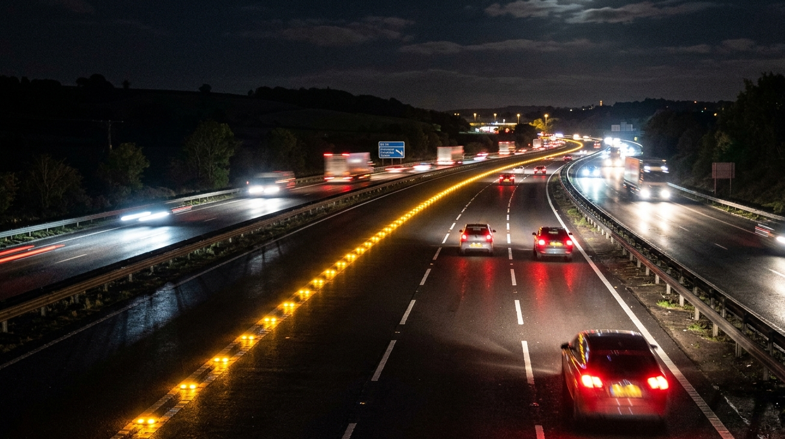
Road studs — also known as cat’s eyes — are physical markers embedded into or adhered to road surfaces at regular intervals. Retroreflective road studs use prismatic lenses to reflect headlights; solar-powered LED road studs add an active lighting element for critical junctions and pedestrian crossings. MoRTH Section 800 governs their use on national highways.
5. Kerb and Crash Barrier Paints
Kerb paints are high-visibility, weather-resistant coatings applied to raised kerbs, medians, and crash barriers. Typically solvent or water-based, formulated for adhesion to concrete and masonry, and available in standard alternating black-and-white or yellow-and-black patterns per IRC guidelines.
6. Cold plastic (MMA) road markings
Cold plastic or MMA (Methyl Methacrylate) is a two-component, chemically cured pavement marking system offering exceptional durability, strong adhesion, and long-lasting performance. It is best suited for high-stress applications: heavy traffic intersections, bus lanes and cycle tracks, toll plazas, and industrial areas where thermoplastic alone may not provide sufficient service life.
Why Pavement Marking Materials Are Essential
1. Enhancing Traffic Control and Lane Discipline
Clear lane markings help drivers maintain proper alignment, reducing sudden lane changes and collisions. On highways, consistent markings ensure smooth traffic flow and minimize congestion.
2. Improving Night-Time and Low-Visibility Driving
Reflective materials, especially in thermoplastic road marking, significantly improve visibility at night and during adverse weather conditions like rain or fog. Glass beads embedded in the markings reflect headlights, making lanes clearly visible.
3. Supporting Road Safety and Accident Prevention
Studies show that well-maintained road markings can reduce accidents by improving driver decision-making. Pedestrian crossings, stop lines, and directional arrows play a vital role in preventing mishaps in urban areas.
4. Ensuring Compliance with Safety Standards
Government and municipal bodies require roads to meet specific marking standards (such as IRC guidelines in India). Using the right road safety materials ensures compliance and avoids penalties or project delays.
Why Material Selection Directly Affects Road Safety Outcomes
The relationship between pavement marking quality and accident rates is well-documented in infrastructure engineering literature.
Retro reflectivity degradation is the primary failure mode for road markings. As glass beads wear and thermoplastic surface erodes, retro reflectivity drops below the minimum threshold (typically 100 mcd/m²/lux per ASTM E1710 for highways) — at which point markings are effectively invisible to drivers at night or in rain.
Roads marked with substandard or expired pavement markings show measurably higher rates of:
- Lane departure accidents, particularly on rural highways at night
- Pedestrian-vehicle collisions at unmarked or faded crossings
- Wrong-way driving incidents on divided carriageways
For procurement officers and municipal engineers, this translates directly to contractual and legal risk. Projects specified under MoRTH must use materials that meet minimum retroreflectivity and durability thresholds — failure to comply during inspections can trigger rectification orders at the contractor’s expense.
How to Choose the Right Pavement Marking Material for Your Project
Use this decision framework when specifying pavement marking materials:
| Factor | Thermoplastic | Conventional Paint | Road Studs |
| Traffic Volume | High (>5,000 PCU/day) | Low to medium | Any, supplement to paint |
| Required Lifespan | 3–5 years | 6–18 months | 5–8 years |
| Night Visibility | High (with glass beads) | Low to medium | High (retroreflective) |
| MoRTH/IRC Compliance | Mandatory for NHs | Permitted for secondary roads | Mandatory for NHs (supplementary) |
| Application Equipment | Specialised (hot kettle) | Standard line painter | Adhesive or recessed installation |
| Cost per km (Indicative) | Higher upfront, lower lifecycle cost | Lower upfront, higher maintenance | Medium |
Choosing the right materials requires evaluating multiple factors to ensure optimal performance, safety, and long-term value across diverse road conditions.For high-traffic roads, thermoplastic road marking offers superior durability, while low-traffic areas can use standard road marking paint. Climate-resistant pavement marking materials ensure visibility in harsh conditions. Investing in quality road safety materials reduces maintenance costs, and selecting IRC-compliant solutions guarantees durability, reflectivity, and adherence to safety standards.
About Prime Roads
Prime Roads is a thermoplastic road marking paint manufacturer based in Chennai, Tamil Nadu, India. Operating 5 manufacturing units and 30+ warehouses across India, the company supplies thermoplastic paints, glass beads, kerb paints, and road studs to highway contractors, government agencies, and construction firms. Prime Roads holds ISO 14001:2015 certification and IRC approval, and exports to 10+ countries including the UAE, UK, USA, South Africa, Nepal, and Sri Lanka.
For product enquiries or project-specific technical consultation, visit primeroads.com/contact-us.
Frequently Asked Questions
1. What are pavement marking materials?
Pavement marking materials are special paints and markers applied on roads to show lane lines, crossings, and directions to drivers.
2. Which road marking is best for highways in India?
Thermoplastic road marking paint is the best choice for highways. It lasts 3–5 years, reflects light at night, and meets IRC:35 standards.
3. How long do road markings last?
Thermoplastic markings last 3–5 years on highways. Regular road paint lasts only 6–18 months depending on traffic and weather.
4. Why are glass beads used in road marking?
Glass beads are mixed into road marking paint to make lines visible at night. They reflect headlights back to the driver, improving safety in dark and rainy conditions.
5. Where can I buy road marking materials in India?
Prime Roads manufactures and supplies thermoplastic paint, glass beads, road studs, and kerb paints across India from Chennai, with 30+ warehouses nationwide. Contact us for a quote.


