

Everything You Need to Know About Reflective Road Studs
-
 prime-shop
 - Posted on
- 0 comments

Introduction
Modern roads require more than just painted lines to guide vehicles safely. During nighttime or heavy rain, lane markings alone may not provide sufficient visibility. This is where Reflective road studs play a critical role.
Today, these devices are widely used as essential road safety products across various roads. Engineers and road planners rely on them to reduce accidents caused by poor visibility. This guide explains types, installation, maintenance, and standards to help you make better road safety procurement decisions.
History of Reflective Road Studs
Reflective road studs were first introduced in the United Kingdom in the 1930s by inventor Percy Shaw. Inspired by the reflection of light from a cat’s eyes at night, he developed a raised reflective marker that could guide drivers safely in the dark.
Over time, this innovation evolved into modern raised pavement markers, which are now used worldwide as effective night visibility devices on highways and urban roads.
What Are Road Reflectors?
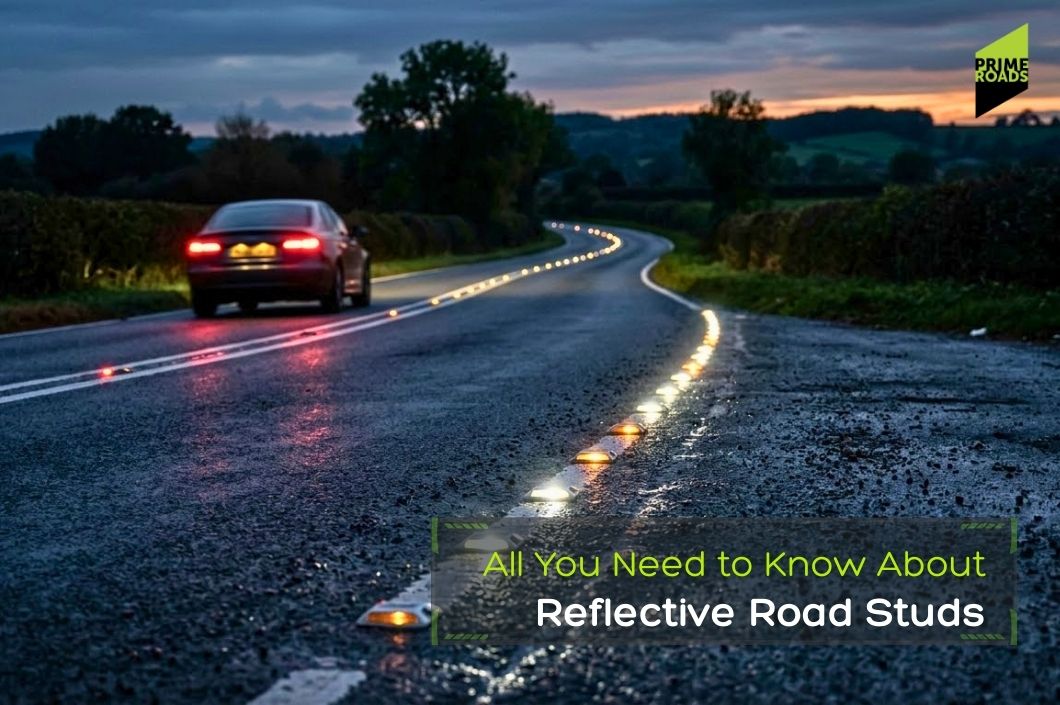
Road reflectors are small raised devices fixed onto road surfaces to reflect light from vehicle headlights back to drivers. These reflectors, often referred to as raised pavement markers, improve lane visibility and guide drivers during night driving, fog, or rainfall.
As one of the most widely used road safety products, these reflectors help reduce lane drifting and enhance traffic discipline.
Types of Road Studs
Various types of road studs are engineered to perform effectively under different traffic volumes, road designs, and environmental conditions, ensuring optimal visibility, durability, and guidance for drivers across highways, city roads, and industrial areas.
- Plastic / ABS road studs
- Aluminum road studs
- Solar-powered road studs
- Ceramic road studs
Each type is produced by a certified road studs manufacturer and engineered to perform effectively as dependable night visibility devices. As a result, they ensure clear lane guidance, improved driver awareness, and consistent safety performance across various traffic volumes and road conditions.
Why Road Studs Are Called Cat’s Eyes
 The name “Cat’s Eyes” comes from the way these markers reflect light. Similar to how a cat’s eyes glow when exposed to headlights at night, road studs reflect light back toward drivers. This reflective property makes them highly effective night visibility devices, allowing motorists to clearly see lane boundaries even in complete darkness.
Another reason for the name is their original design inspiration. This observation led to the development of reflective raised pavement markers that function in the same way on roads.
Key Functions of Road Studs
Road studs serve several important functions in modern traffic management systems. These road safety products provide visual guidance to drivers and enhance lane discipline on busy roads.
They help drivers identify road edges, lane divisions, and traffic flow directions. By reflecting light directly toward drivers, they improve nighttime navigation and reduce the chances of accidents. Many highway engineers also use them as supplementary night visibility devices in combination with thermoplastic road markings.
Additionally, they help maintain lane alignment during adverse weather conditions such as rain or fog, when painted road markings become difficult to see.
Importance of Reflective Road Studs in Road Safety
- Improve night time lane visibility for drivers
- Help reduce accidents caused by poor visibility
- Assist drivers in identifying lane boundaries
- Guide vehicles safely during rain or fog
- Enhance overall road safety infrastructure
- Support traffic discipline on highways and city roads
Working Principle of Reflective Road Studs
The working principle of Reflective road studs is based on retro-reflection. When vehicle headlights hit the reflective surface of the stud, the light is redirected back toward the driver’s eyes. This allows the driver to clearly see lane markings and road alignment even in dark conditions.
Key mechanisms involved include:
- Reflective lenses or prisms inside the stud
- Light reflection directed toward vehicle headlights
- Raised design that keeps reflectors visible above water films
- Durable housing that withstands heavy vehicle loads
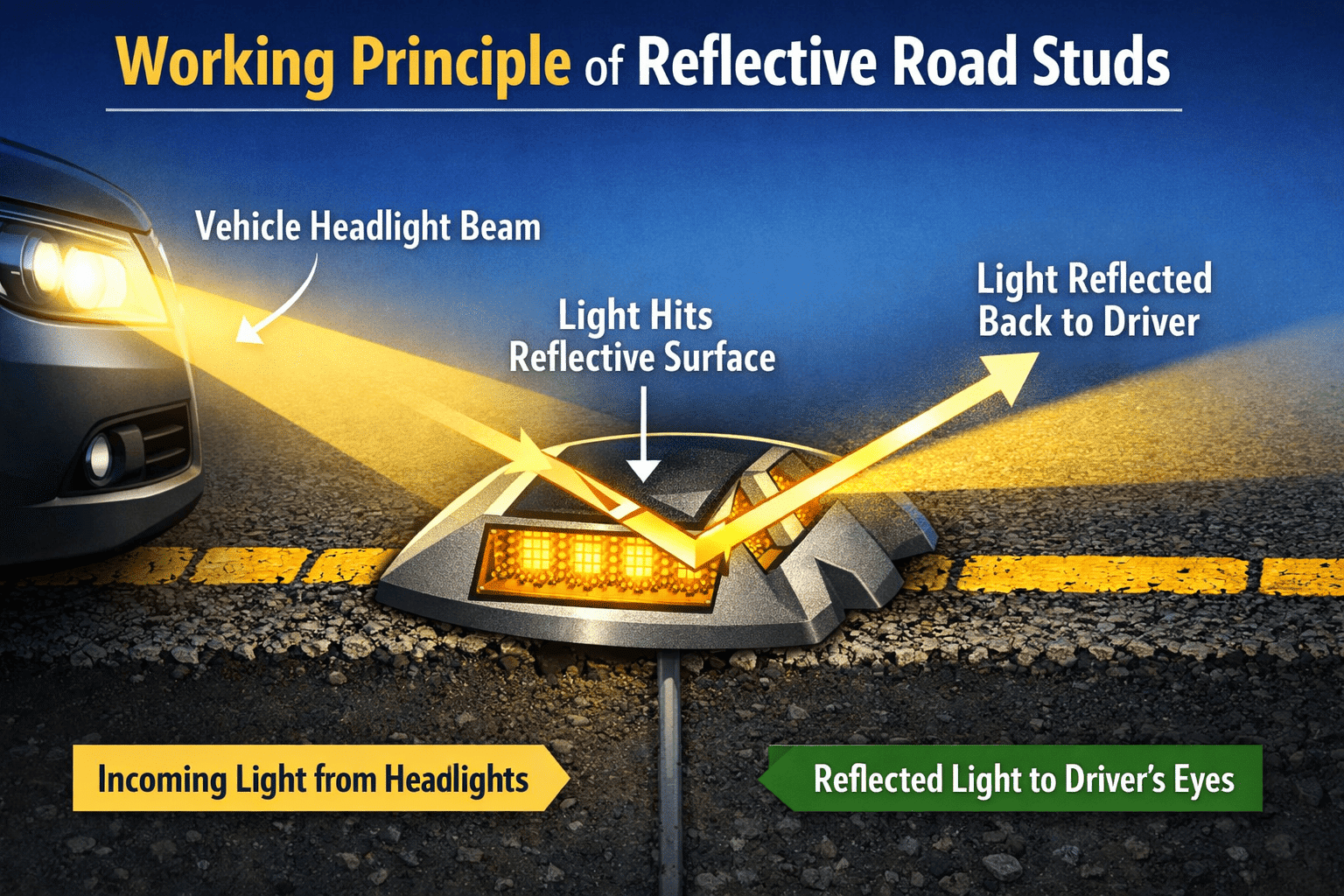
Because of this mechanism, raised pavement markers are considered reliable night visibility devices for highways and high-speed roads.
Pros and Cons of Road Studs
Road studs improve lane visibility and driving safety at night but may require proper installation, regular maintenance, and occasional replacement to ensure long-term performance.
| Pros | Cons |
| Improve night driving visibility | Initial installation cost |
| Enhance lane discipline | May require periodic maintenance |
| Durable under heavy traffic | Damage possible from extreme impact |
| Work during rain and fog | Incorrect installation reduces lifespan |
| Support modern road safety systems | Replacement needed after wear |
Despite minor limitations, these road safety products remain one of the most effective solutions for improving roadway visibility.
Installation and Maintenance of Reflective Road Studs
Proper installation plays a major role in ensuring the durability and performance of these markers. As a result, professional installation ensures that reflective road studs function effectively for many years.
Installation Process
- Surface Preparation
The road surface is thoroughly cleaned to remove dust, oil, moisture, and debris. Proper surface preparation ensures strong bonding between the adhesive and the road stud for long-lasting installation. - Position Marking
Precise installation points are marked on the road according to lane design, spacing standards, and traffic flow direction to ensure correct alignment and consistent placement of road studs.
- Adhesive Application
A high-strength epoxy or bitumen-based adhesive is applied evenly to the prepared surface to secure the road stud firmly and provide durability against traffic pressure and weather conditions. - Placement of Stud
The road stud is carefully positioned on the marked spot and pressed firmly to ensure proper bonding while aligning the reflective face correctly with the direction of approaching traffic. - Curing Time
After installation, sufficient curing time is provided for the adhesive to harden completely, ensuring strong fixation before the road is reopened to regular vehicle traffic.
Maintenance Guidelines
Routine inspection and timely maintenance help ensure that these raised pavement markers remain durable, highly visible, and capable of delivering consistent road safety performance over time.
- Check studs periodically for damage or loosening
- Clean reflective lenses to maintain brightness
- Replace worn or broken units when necessary
- Ensure proper alignment after road resurfacing
Regular maintenance keeps these night visibility devices functioning effectively and helps extend their lifespan.
Color Coding and Usage of Raised Pavement Markers
Different colors of road studs are used to indicate specific traffic guidance information. Therefore, each color serves a unique purpose in road safety systems.
- White Road Studs
Used to mark lane divisions and road center lines. - Yellow Road Studs
Indicate the median or central reservation separating traffic directions.
Different Color of Road Studs - Red Road Studs
Placed on the left edge of the road to warn drivers they are approaching the road boundary. - Green Road Studs
Used at entry or exit points such as slip roads and junctions. - Blue Road Studs
Often used near fire hydrants or emergency service access points.

These color-coded raised pavement markers help drivers interpret road layouts quickly and respond safely while driving.
Closing Note from Prime Roads
Road safety depends on clear visibility systems, where road safety products improve lane discipline and nighttime guidance, and ensure durable, compliant performance.
Prime Roads, a leading manufacturer of thermoplastic road marking paints and road safety solutions based in Chennai, provides engineered products designed to enhance road visibility and traffic safety. By integrating high-performance road studs with advanced marking systems, we contribute to building safer and more efficient road networks across India.
Connect with Prime Roads today to discuss your upcoming highway safety project.
FAQs
1. What is the primary function of reflective road studs?
They improve nighttime lane visibility by reflecting vehicle headlights back to drivers, reducing accidents and enhancing alignment.
2. How often should road studs be replaced?
Replacement depends on material type and traffic volume, typically ranging from 2 to 6 years with regular maintenance.
3. Are solar road studs better than traditional ones?
Solar variants provide active illumination, making them ideal for fog-prone areas, while traditional reflective types are cost-effective for standard highways.
4. What standards apply in India?
IRC:35-2015 and MoRTH guidelines regulate performance, load capacity, and reflectivity for road installation.
5. Does Prime Roads supply road studs for large infrastructure projects?
Yes, Prime Roads supplies reflective road studs for highways, municipal roads, and infrastructure projects, providing reliable products that support effective lane guidance and improved road safety.


